





HOW IT WORKS
CHOSEN TO RELEASE NFTs?
The process of film restoration combines technology and craftsmanship in an extensive effort to restore and digitally preserve the images contained in analogue form for a digital audience
The process of film restoration combines technology and craftsmanship in an extensive effort to restore and digitally preserve the images contained in analogue form for a digital audience
When Company 3 received the original cut negative for The Wolf Of Wall Street, the first step was to clean the delicate material using the ultrasonic cleaning process. Then, any missing sprockets or physical damage were repaired to prepare to bring all the imagery into the digital realm.
The negative was all scanned using the company’s dft-film Scanity film scanner. The scanner pulls out all the picture information from the red, green and blue records of the film negative into individual digital channels. This method enables all the fine details of the picture.
These are then captured in log format to retain the entire dynamic range of film, which generally includes over- and under-exposure information that internationally renowned cinematographer Rodrigo Prieto, ASC, AMC captured on the “neg”, thus allowing additional leeway in the subsequent color grading process. Each frame is then stored in the robust DPX format at 4K resolution and with full 16-bit depth to retain every bit of picture information.


Subsequently, the anamorphic “squeeze” effect that comes from shooting in anamorphic widescreen format, is removed; a LUT (lookup table) is added as metadata to convert the material from the very flat-looking log format to the appropriate color space so it looks appropriate and finally, a basic look LUT was also combined with the material to help add the general look that the filmmakers applied when finishing the film.


Since The Wolf Of Wall Street was mostly shot “old school”, on 35mm film, every shot had to be put into sync traditionally, by lining up the sound of the wooden clapperboard with the audio. The project involved more than 900,000 feet of film – everything that was shot during the production, and that adds up to roughly 9900 minutes or 165 hours of material that would take just under one full week to run in its entirety! Once the film negative was scanned, the now digital picture and production sound, which had been stored on DVD, had to be manually lined up for each shot. Fortunately for the Company 3 staff, the original film crew provided good production notes to help navigate the Herculean task and those had been very well archived, albeit with some rather scratchy handwriting.
Finally, Company 3 derived smaller and more nimble formats of the material for editors, stakeholders and others to be able to view and edit the material.
The 4K 16-bit DPX scan is the basis for capturing all the digital information and then generating Avid (DNX 115) and high quality ProRes files to allow the company to edit and recut and do other things with the material.
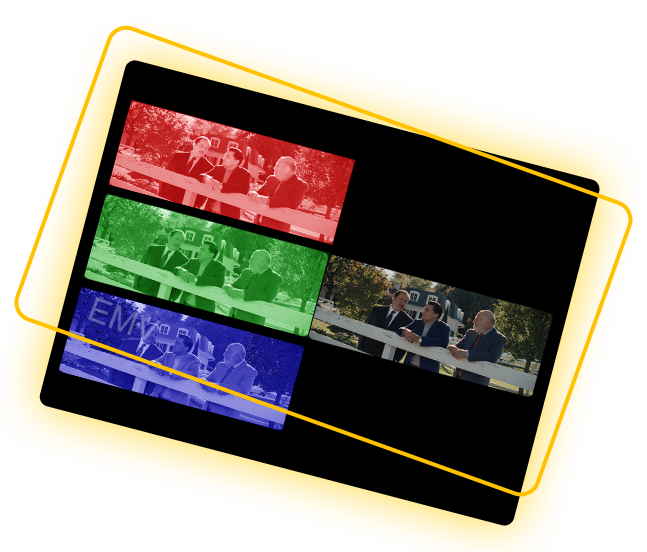
The graphic shows the red, green and blue records as digitized in 4K resolution. Then a reframed version to get rid of the anamorphic squeeze, a version with the base LUT only as a reference and then the graded version from the company’s dailies colorist, which can be revised or even replaced by grading depending on how the company wants to use it.
The results are a perfect digital
version of the imagery.